

Hunger
I could never get enough

Thanks for joining me here at Say Yes to the Mess! This is my weekly note of encouragement for those who are tired of pleasing, performing, and pretending to be perfect. It’s exhausting and I hope you enjoy leaning into the messiness of life here. I’m Amber Keating—licensed psychotherapist, healing coach, and recovering perfectionist. I love guiding people into greater connection with themselves, their loved ones, and the incredible world around us. Today’s post is inspired by Florence + The Machine’s Hunger. I really feel like they’re singing about different ways we soothe ourselves when our addiction to appearing perfect becomes more than we can bear.
Collapsing under the Weight
Last week, I touched on the subject of perfectionism as a set of inner messages and outer behaviors we can become addicted to, because our society really loves a “good girl.” We push and squeeze and cram and punch down and give away our vital essence until what’s left is ever so pleasing to the people and systems in control. These dejected remnants are the shadow side of perfectionism, every bright and beautiful aspect of ourselves that we’ve given up in the name of positive attention, until the vestiges are nothing but a crumbling mask. Since perfect isn’t achievable in this incredibly messy world, we can’t attain it without beating ourselves up, which is simply a mental and emotional form of self-harm. Take a moment. Read that again. Beating ourselves up is simply a mental and emotional form of self-harm. Let’s be clear, that shit is addictive - at least in U.S. culture - because we get an obnoxious amount of praise and reinforcement for it.
During my eighteen years working in community (publicly funded) mental health, I remember being told repeatedly that self-sacrifice was important. That was a fantastic set-up for me: the young, idealistic, and perfectionistic social worker ready to give her all for a pat on the back and a Starmucks gift card. I’m loathe to say the entire social work field preyed on vulnerable people, but I don’t know. After all, if it walks like a duck… It has often seemed to me that we’re the one branch of the therapeutic professions (don’t get me started on teachers, nurses, food servers, home health aides) that is not only encouraged but expected to work for low pay in a publicly-funded setting. Then if you want to be paid more, switching to hospital or direct government jobs only yields higher caseloads and greater stress. We received messages from management ALL the time about:
We aren’t doing this for the money.
I need you to go above and beyond here.
Maybe this isn’t the right workplace for you, if you can’t work longer and for free.
And my least favorite line from a job description EVER: Other duties as assigned by supervisor/manager.
Lurking in the Shadow
While working on this piece, I felt drawn to share some of the dabbling I’ve done in archetypal psychology and the shadow self. The shadow is a Jungian archetype that is made up of instincts and less favorable urges or drives. Part of the unconscious mind, it “forms out of our attempts to comply with cultural norms and expectations.”1 It’s everything in us that we’ve been taught is unacceptable, so we deny it, ignore it, banish it to the outer darkness. We’ll even deny it so strongly that we’ll see and harshly judge those qualities in others, all while being unable to see that we’re doing the same damn things. Isn’t being human fun?! These include things like having needs, desires, shortcomings, challenges, or unpleasant emotions such as anger or jealousy. Perfectionism drives us appear bright, shiny, calm, loving, giving, social, and attentive. But the opposities of these also exist within us. Consider moments when you have focused all your energy into being perfectly pleasing for others, what is that like for you? What does pleasing and performing for others require of you?
“Sometimes it is difficult for us to realize when we are losing our instincts, for it is often an insidious process that does not occur all in one day, but rather over a long period of time. Too, the loss or deadening of instinct is often entirely supported by the surrounding culture, and sometimes even by other women who endure the loss of instinct as a way of achieving belonging in a culture that keeps no nourishing habitat for the natural woman.” ~ Dr. Clarissa Pinkola Estés, Women Who Run with the Wolves2
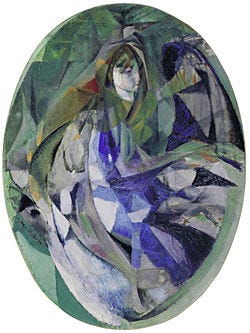
We live in a society of dualities, extremes that include a whole range of mess in the middle. It’s challenging in this life to have positives without the negatives. It’s the great paradox of everything natural in this world. The sun rises, then night reliably falls again, day after day. Seasons change. Not every single day can be bright sun and gentle breezes (nope, not even in tropical areas!). Plants sprout, grow, and either die or are harvested. Animals are born, they grow and thrive, then age and die. U.S. culture is quite fond of emphasizing individualism and positive thinking, which I’ve come to think could be a tool to keep us from seeing the faulty systems at play. Yet here’s even a paradox for that: positive reframing absolutely works to lift our spirits; I just don’t recommend it when doing so keeps us stuck in unhelpful patterns like denying our wholeness, denying our needs and values by shoving them into the unconscious.
Fragmentation to Integration
It might not feel possible to embrace both ends of the spectrum of human experience, let alone everything in between (let’s have a collective Say Yes to the Mess!) but both are still there. So how do we hold all of this complexity within and around ourselves? How do we become the fullest expression of ourselves, instead of fragmenting? Because it’s this fragmentation that creates a shadow self, the collective aspects within us that we refuse to acknowledge or when we do acknowledge them, we react with judgment or shame. That means a whole lot of us are walking around beating ourselves up in service of maintaining a rather split personality: the shiny, happy one that masks the grumpy, martyred one.
Shadow will make itself known. It’s only a matter of time. Have you ever had a moment when something minor went wrong and you lost your everloving mind over it? That’s the shadow popping off. You already know I’m a recovering perfectionist, which means I often enjoy making things sensible and orderly. When my spouse and I first started dating, we went to look at Christmas lights in a nearby neighborhood. Naturally, I made a map (this was before smartphones) to help us navigate the locations with the most or best light displays. Then-boyfriend pointed out some lights down a street that I hadn’t put in my map and I paused myself before I could protest, knowing I didn’t want this incredibly attractive person to see my full crazy just yet. However, he is extraordinarily observant and he noticed my urge plus subsequent pause and playfully said, “What? It’s not on your map?!” I threw a faux tantrum, declaring, “No! It’s NOT on my map!” Then we went off script and enjoyed a whole other neighborhood of fun holiday lights. We still laugh about that now, as a poignant example of what it’s like when someone really sees what we’re trying to hide and doesn’t shame us for it. He began showing me that my own love of maps and structure need not be a problem. It’s actually quite useful in a lot of ways, but it can interfere with my spontaneity at times. Becoming aware is an important step, because what we’re not aware of will inadvertently control us.
“Until you make the unconscious conscious, it will direct your life and you will call it fate.”
~ Carl Jung
This shadowy side of us can take many forms. Road rage is one of my personal favorites. I feel a great deal of anger for my clients that are being subject to oppressive systems that interrupt their growth and healing, but there’s not always somewhere for me to channel that anger. I can only write so many strongly worded letters to my congresspeople. So I set the anger aside and when someone on the road engages in the minor infraction of cutting me off or failing to use a turn signal, it can trigger deep rage. That’s not so great in a huge city with lots of wackadoo drivers that I absolutely cannot control. Additional examples of the duality of carving away our unpleasant qualities include: Food restriction and bingeing. Obsessions about irrational fears and subsequent compulsive behavior that attempts to manage our distress. Addictions of all kinds. The mask we wear to uphold perfectionism takes so much energy, we just want relief. Thus we consume food, alcohol, drugs, sex, violence, gambling, shopping, even more overachieving, and probably a whole host of other unhelpful things.
Building Inner Safety
As I’ve noted many times in my writing, these patterns of dissociation and fragmentation have been extremely helpful in your life. Your system is doing the only thing it knows how to do to keep you regulated. Some would call this the adaptive child, which is essentially a child play-acting at being an adult. But the adaptive child doesn’t have adult power or skills, so the their efforts come out all dark and twisty. This is why healing work is hard to do on your own. I like to say that our subconscious mind can be a dangerous neighborhood, so it’s best not to travel there alone. As we start addressing our own shadow, it can transform and bounce around from one addictive pattern to another. All of this is in the name of seeking comfort and soothing. We can’t dig deep until we know how to manage our distress and we commit to practicing those skills regularly.
As always, I’m not going to leave you in the darkness without giving you a little light to guide the way back. What you might not know is that underneath all this perfectionism and exhaustion and anger and unhelpful attempts to calm your jangled nerves, is a dysregulated inner child that is asking YOU for support. Furthermore, parts of you may not want to have to be your own parent. Your actual parents should have shown up for you, instead of relying on you to support them. That’s part of my story and may not be yours, but notice the potential for resentment anyhow. That can grow into rage that you are at point in time that is almost demanding you reparent yourself, when you’ve already spent so many years parenting others. This is something I support my clients with all the time. I’ve developed multiple tools to support you in learning how to soothe yourself in service of becoming the most authentic version of you.
The good news here is that we can turn all this self-flagellation and -fragmentation into wholeness and authenticity. Recognize the layers and layers and layers of walls you’ve erected to protect your wild, precious heart. Taking down those walls must be done gently, because we can and will rebuild them ever so fast when dysregulation reappears. When we start taking the walls down, we start feeling things (I know, so gross) and that’s scary AF. In future posts, I’ll be exploring more of what it’s like to do the profound inner work of dismantling those walls that keep us locked in perfectionism and its less attractive resentment patterns. Until next time, wishing you soft places to land and all the safe connection you can find, because connection matters most!
If you saw yourself or someone else in this essay, please share it. Forwarding this to your favorite overachiever may be exactly the thing they need to drop their own perfectionist ways. Talk it over with your therapist, counselor, or coach. Use it to help a loved one understand you better.
Are you tired of pleasing, performing, or pretending to be perfect? Are you considering making a change? I’m forming a group to help burnt out perfectionists rediscover their joy and passion. Click here to book a consultation. This will be a 45 minute phone call in which I listen deeply to your challenges and share my insights as an experienced therapist and coach. If you feel at the end of the call that we’d be a good fit to work together, I’ll share with you the program I created that helps perfectionists find lasting relief from burnout, resentment, and stress.
Cherry, K. (2023, March 11). The 4 Major Jungian Archetypes. Verywell Mind. https://www.verywellmind.com/what-are-jungs-4-major-archetypes-2795439
Pinkola Estés, C. (1992). Women Who Run With The Wolves: Myths And Stories Of The Wild Woman Archetype (pp. 248–249). Ballantine Books.